The future of the UK’s North Sea energy industry is once again at the centre of a major political and environmental debate, as oil and gas companies urge the government to approve controversial offshore developments.
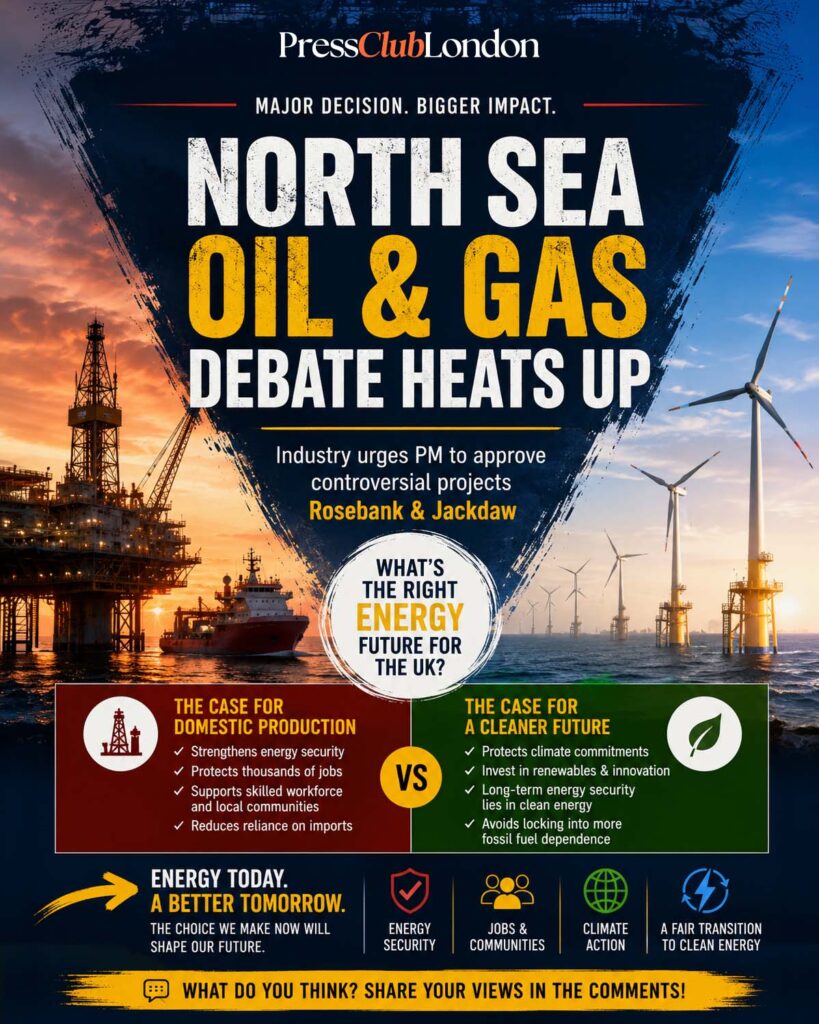
Industry leaders are pressing for progress on major projects including the Rosebank oilfield and the Jackdaw gasfield, arguing that the UK will continue to rely on oil and gas for years to come. Their message is clear: if Britain still needs these fuels, supporters argue, producing more of them domestically could help reduce dependence on overseas suppliers while protecting industrial skills, jobs and investment.
The debate, however, goes far beyond energy production.
The Case for Domestic Energy Production
Supporters of new North Sea developments say the UK faces an important energy security challenge. As existing North Sea fields decline, Britain could become increasingly dependent on imported oil and gas.
Industry groups argue that continuing domestic production would help maintain Britain’s energy infrastructure, highly skilled workforce and wider supply chain. They also say the transition to cleaner energy should not mean abruptly abandoning an industry that remains important to the economy.
Their preferred approach is an “all-energy” strategy—continuing to invest in renewables and lower-carbon technologies while recognising that oil and gas are likely to remain part of the energy system during the transition.
This argument has gained additional political importance because the future of projects such as Rosebank and Jackdaw has become a test of how the UK balances industrial policy, energy resilience and climate ambitions. Industry supporters believe approving existing developments could provide greater certainty for investors and protect jobs across offshore energy communities.
Why Rosebank and Jackdaw Are So Controversial
The two projects have become symbols of the wider argument over Britain’s energy future.
Jackdaw, a major gas development east of Aberdeen, is supported by those who believe domestic gas can play an important role in maintaining energy supply during the transition away from fossil fuels.
Rosebank, located west of Shetland, is even more controversial because it is one of the UK’s largest undeveloped oil and gas projects. Supporters point to investment and wider economic benefits, while opponents highlight its potential climate impact and the fact that much of its oil could ultimately serve international markets rather than directly reducing UK household energy bills.
The Climate Argument Against New Drilling
Environmental groups and climate campaigners strongly oppose further North Sea development.
Their argument is that approving major new fossil fuel projects risks undermining the UK’s climate commitments at a time when the world is attempting to reduce greenhouse gas emissions rapidly. Critics say the long-term solution to energy security is not more dependence on fossil fuels, but faster investment in renewable power, energy efficiency, electrification and infrastructure.
There are also questions about the direct economic benefits. Recent reporting on Jackdaw, for example, highlighted debate over the number of permanent direct jobs associated specifically with the project, despite broader industry claims about employment across the supply chain.
Critics also challenge the idea that additional North Sea production would automatically mean lower energy bills. Oil and gas are traded in international markets, meaning domestic production does not necessarily translate directly into cheaper prices for consumers.
A Difficult Political Decision
The government now faces a politically sensitive balancing act.
Rejecting the projects could strengthen its climate credentials but would anger parts of the energy industry, trade unions and communities dependent on offshore employment. Approving them, meanwhile, could provide support for domestic industry and energy production but trigger fierce opposition from climate groups and raise questions about the UK’s commitment to its net-zero transition.
The situation is further complicated by legal and environmental scrutiny surrounding the projects. Previous challenges have pushed the government to consider climate impacts more carefully before reaching final decisions.
The Bigger Question: What Should Britain’s Energy Transition Look Like?
Ultimately, the North Sea debate is about more than two projects.
It raises a fundamental question: Can the UK continue developing domestic oil and gas while simultaneously claiming leadership in the transition to clean energy?
Industry leaders believe the answer is yes. They argue that a realistic transition requires maintaining existing energy capabilities while renewables scale up and demand for fossil fuels gradually declines.
Climate campaigners disagree. They argue that continued investment in new oil and gas risks locking the country into fossil fuel dependency and delaying the transformation required to meet climate targets.
Both sides agree on one thing: Britain’s energy system is changing. The real disagreement is over how quickly that change should happen—and whether new North Sea oil and gas developments should have any role in the journey.
Final Thoughts
The decision over North Sea developments such as Rosebank and Jackdaw could become a defining moment for UK energy policy.
Supporters see domestic production as a matter of energy security, jobs and industrial strength. Opponents see new drilling as incompatible with the urgency of the climate crisis and a distraction from investing fully in renewable energy.
Whatever the final decision, the controversy highlights a challenge facing governments around the world: how to keep energy affordable and secure today while building a cleaner, more sustainable system for tomorrow.