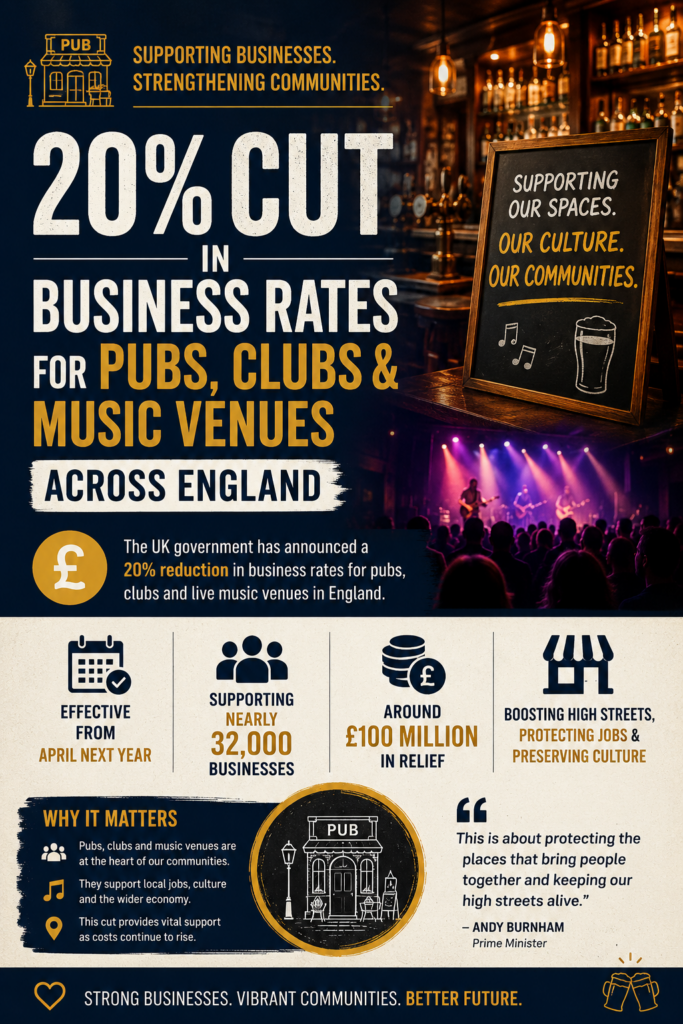
The UK government has announced a 20% reduction in business rates for pubs, clubs and live music venues across England, in a move designed to support some of the hospitality and entertainment businesses facing sustained financial pressure.
The measure, announced by Prime Minister Andy Burnham, is expected to provide around £100 million in relief to nearly 32,000 businesses. The reduction is scheduled to take effect from April next year and is intended to help protect local high streets, support jobs and preserve venues that play an important role in communities and Britain’s cultural life.
A welcome relief for struggling businesses
Pubs, clubs and grassroots music venues have faced rising operating costs in recent years, including increased staffing, energy and supply expenses. For many smaller businesses operating on tight margins, business rates have added to the financial strain.
The government says the 20% reduction is part of a broader effort to support high streets and make it easier for people to continue enjoying local social and cultural spaces.
For independent pubs and music venues in particular, the announcement could provide some breathing room. These businesses are not simply commercial establishments; they often serve as community meeting places, support local employment and provide platforms for musicians and performers.
Not everyone believes the cut goes far enough
While the announcement has been welcomed by parts of the industry, critics argue that the measure is only a limited response to a much wider problem.
Hospitality representatives have continued to call for broader tax reforms, particularly a reduction in VAT across the hospitality sector. Restaurants and hotels have also raised concerns about being left outside the scope of the latest business-rates relief.
Some business owners and industry voices have therefore described the 20% reduction as helpful but insufficient, arguing that rising wages, energy costs, taxation and other operating expenses continue to put pressure on businesses.
What this could mean for the high street
The significance of the policy extends beyond the businesses receiving the discount.
Pubs, clubs and live music venues are closely connected to the wider local economy. They attract visitors, create employment and contribute to the character of town and city centres. A struggling venue can also affect nearby businesses, from food outlets and taxis to retail and accommodation.
The government is therefore positioning the measure as part of a wider attempt to strengthen Britain’s high streets and protect the social infrastructure that supports local communities.
However, whether the policy produces a lasting impact will depend on how businesses use the savings and whether further measures follow. The government has indicated that a broader overhaul of the business rates system is expected in the next Budget, suggesting that this announcement may be an initial step rather than a complete solution.
The bigger picture
The business rates reduction highlights a wider challenge facing the UK’s hospitality and entertainment sectors: how to keep traditional community spaces financially sustainable while operating in an environment of rising costs and changing consumer behaviour.
For pub owners, club operators and music venue managers, a 20% rates reduction could offer valuable short-term support. But many in the industry believe that long-term sustainability will require a combination of tax reform, lower operating costs and policies that recognise the cultural and economic value of these businesses.
For now, the announcement represents a significant shift in the government’s approach to supporting pubs, clubs and live music venues in England. The real test will be whether this £100 million intervention can translate into fewer closures, more sustainable businesses and stronger high streets in the years ahead.
In short, the 20% cut is a welcome step—but for an industry under sustained pressure, many believe it is only the beginning.