Economists are calling on the UK government to intervene as concerns grow that the Bank of England’s bond-selling programme could be adding to the country’s already elevated borrowing costs.
The Bank has been gradually unwinding its quantitative easing programme through quantitative tightening (QT), selling government bonds, known as gilts, back into financial markets. The policy is intended to reduce the Bank’s large stock of assets accumulated during years of economic stimulus.
However, the timing of those sales has become increasingly controversial.
Why are bond sales becoming a problem?
When the Bank sells gilts, more government debt becomes available to investors. If demand does not keep pace with that supply, bond prices can fall and yields can rise.
Higher gilt yields mean the UK government has to offer investors greater returns when it borrows money. That ultimately increases the cost of servicing public debt.
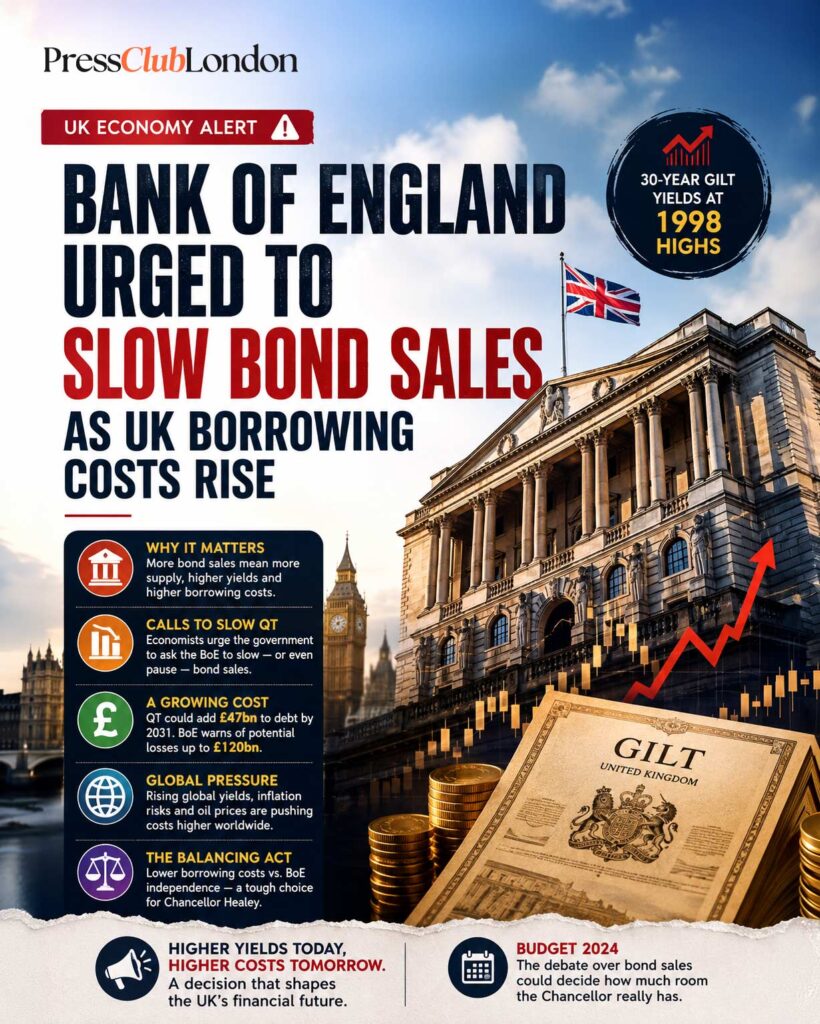
The pressure is particularly significant because UK borrowing costs have already climbed sharply. Thirty-year gilt yields recently reached levels not seen since 1998, highlighting the growing pressure on the government’s finances.
Calls for a slower approach
Economists are urging Chancellor John Healey to press the Bank of England to slow its bond-selling programme, with some arguing that sales should even be paused.
The Bank is expected to consider reducing the pace of annual sales from roughly £70bn to around £50bn. However, completely stopping quantitative tightening is not currently the Bank’s preferred approach.
Supporters of a slower pace argue that reducing the additional supply of gilts could help ease pressure in the bond market and potentially lower government borrowing costs.
But the issue is complicated by the Bank’s independence. Monetary policy decisions are designed to remain separate from day-to-day political decisions, meaning any direct pressure from the Treasury could raise questions about the relationship between fiscal and monetary policy.
A growing cost for the Treasury
The issue is particularly important for the government’s upcoming Budget.
The Office for Budget Responsibility has estimated that quantitative tightening could add around £47bn to government debt by 2031, while the Bank has estimated potential losses of up to £120bn on its bond holdings under certain interest-rate scenarios.
At the same time, the government is already dealing with a difficult fiscal environment. Higher gilt yields reduce the amount of money available for other priorities and could make it harder for the Chancellor to maintain fiscal headroom.
Global markets are adding to the pressure
The UK’s bond-market problems are not happening in isolation.
Global government bond yields have been rising as investors react to persistent inflation risks, higher energy prices and geopolitical instability. US 10-year Treasury yields recently moved above 5%, while rising oil prices have intensified concerns about inflation and future interest rates.
That international pressure makes it harder for the UK to address its borrowing costs through domestic policy alone.
What happens next?
The debate now centres on how quickly the Bank should unwind its bond holdings.
A slower QT programme could reduce some of the immediate pressure on the gilt market, but it would also mean the Bank takes longer to reduce its balance sheet. Completely stopping sales would represent a much more significant policy shift.
For Healey, the challenge is balancing the need for lower borrowing costs with the importance of maintaining investor confidence and respecting the Bank of England’s operational independence.
With the government’s Budget approaching, the debate over bond sales is becoming more than a technical monetary-policy discussion. It could directly influence how much room the Chancellor has to make spending and tax decisions — and how expensive the UK’s debt becomes in the years ahead.