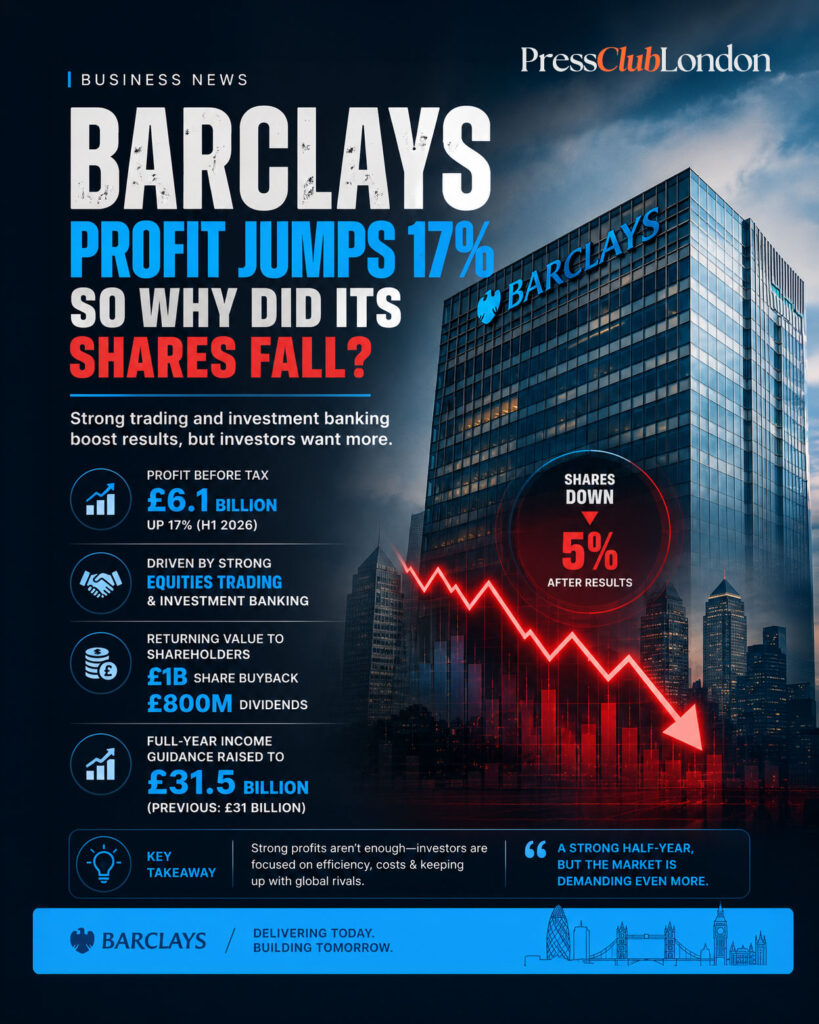
Barclays has reported a strong first half of 2026, with profit before tax rising 17% to £6.1 billion for the January–June period, slightly ahead of analysts’ expectations of around £5.94 billion. The performance was supported by strong equities trading activity and investment banking fees, as volatile markets created more opportunities for financial institutions.
However, the market’s reaction highlights an important lesson: strong financial results do not always translate into a rising share price. Barclays shares fell by nearly 5% following the results, with investors reportedly concerned that its equities performance did not match the exceptional gains achieved by some major Wall Street competitors. The bank’s stock had already risen substantially over the previous year, meaning expectations were high going into the results.
The bank also announced a £1 billion share buyback and £800 million in dividends, signalling confidence in its capital position and its ability to return excess capital to shareholders. Barclays also raised its full-year income guidance slightly, from £31 billion to £31.5 billion, while maintaining that it remains on track to meet its 2026 performance objectives.
The bigger story is the changing dynamics of global banking. Barclays’ investment banking and equities businesses have benefited from increased market activity, dealmaking and trading volumes. But the bank is also facing pressure from rising costs, with additional expenses expected in the second half of the year. This creates a balancing act between investing in future growth, managing expenses and delivering returns to shareholders.
What this means
Barclays’ results show that the UK banking sector continues to benefit from resilient financial markets and strong investment banking activity. Yet the negative share-price reaction demonstrates that investors are increasingly judging banks not simply on whether profits are growing, but on how efficiently they are generating those profits and whether they can keep pace with global competitors.
For Barclays, the next challenge will be converting a strong first half into sustainable growth while controlling costs and maintaining shareholder returns. The results are positive, but the market’s response suggests that beating expectations is no longer enough when expectations themselves are already extremely high.