The UK government is planning changes to secondary education in England that could give pupils a clearer route from school into the world of work.
Under the proposed reforms outlined by Prime Minister Andy Burnham, pupils from around the age of 14 could have greater access to technical and practical subjects alongside traditional academic education. Areas such as manufacturing and artificial intelligence are expected to form part of the wider approach, with courses designed to reflect the skills needed by employers and industries in local communities.
The idea behind the policy is to create stronger connections between education and employment. Rather than expecting every student to follow the same academic pathway, the government wants young people to have more opportunities to explore different career routes and develop skills that could directly support their future employment.
The move comes amid concerns about the number of young people who are not currently in education, employment or training. The reforms are intended to provide clearer pathways for pupils who may be better suited to technical, vocational or industry-focused learning.
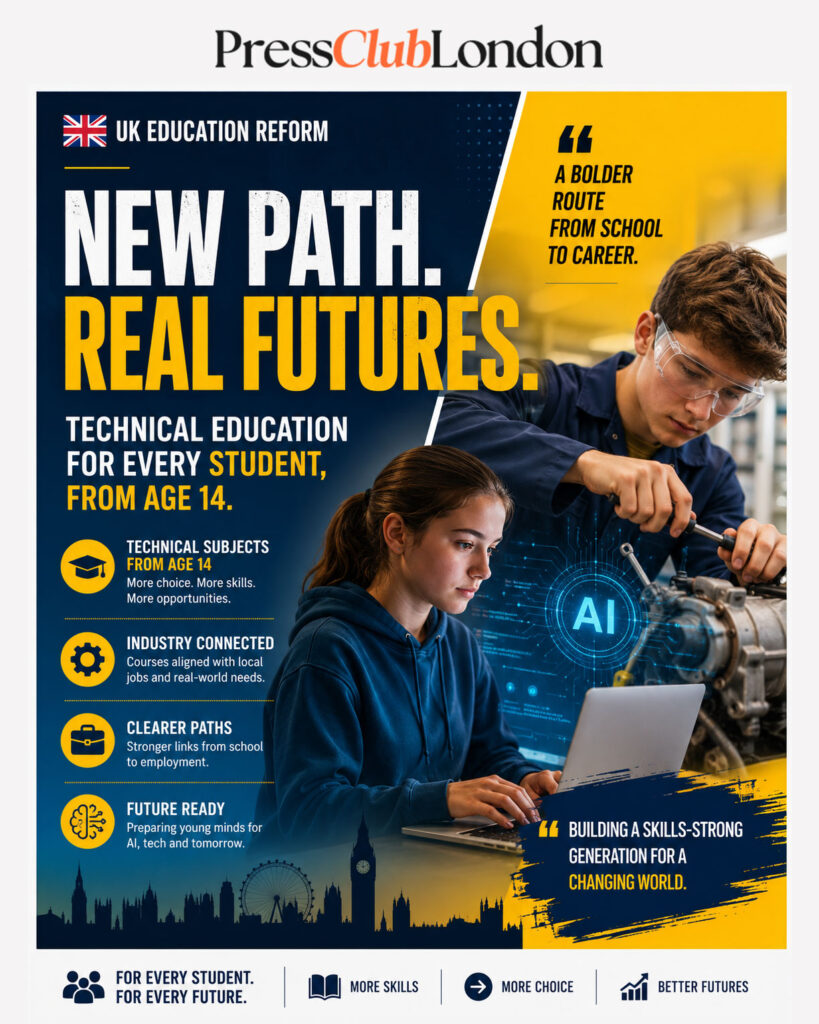
The growing importance of technology is also reflected in the proposals. With artificial intelligence transforming industries and changing the skills employers are looking for, introducing students to emerging fields at an earlier stage could help them become better prepared for a rapidly changing economy.
However, the success of the plan will depend on how effectively it is implemented. Schools will need access to appropriately trained teachers, modern facilities and strong partnerships with employers and local industries. There will also need to be a balance between practical education and the broad academic knowledge that students need to keep their future options open.
The proposed changes represent a wider shift in how education and career preparation are viewed. For decades, academic qualifications have often been seen as the primary route to success, while technical and vocational education has received comparatively less attention. A stronger focus on practical skills could help change that perception and give students more meaningful choices.
If delivered effectively, the reforms could help create a more flexible education system—one where a young person’s future is not defined solely by traditional academic subjects, but by their individual strengths, interests and ambitions.
The bigger question is whether schools, employers and policymakers can work together to turn this vision into a sustainable pathway from classroom to career.
For today’s students, the world of work is changing faster than ever. Education may need to change with it.