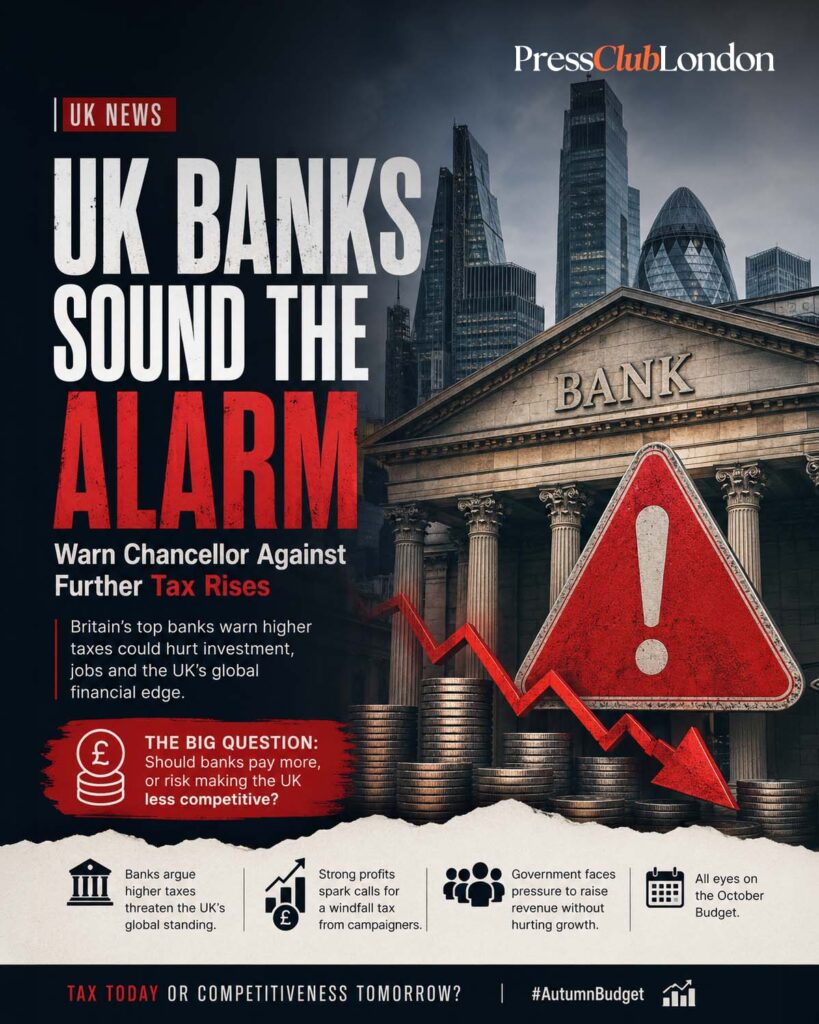
Britain’s biggest banks have issued a fresh warning to the government over the possibility of further tax increases on the financial sector, setting the stage for a major debate ahead of Chancellor John Healey’s first Budget in October.
A letter from UK Finance, the industry body representing major lenders including Barclays, HSBC, Lloyds Banking Group and NatWest Group, argues that additional bank-specific taxes could damage the UK’s international competitiveness.
The warning comes as the government faces increasing pressure over how to raise revenue while supporting economic growth and addressing wider public spending challenges.
Banks Push Back Against Higher Taxes
The banking sector has long been subject to additional taxes introduced in the aftermath of the 2008 financial crisis. These include the Bank Levy and a corporation tax surcharge, measures designed to ensure banks contribute more following the financial crisis and the public support provided to the sector.
However, banking leaders argue that the UK’s tax environment is already placing financial institutions at a disadvantage compared with rival international financial centres.
UK Finance has now urged the new chancellor to avoid further increases, warning that higher taxes could make the UK less attractive for investment and financial services activity.
The concern is not limited to British banks. JPMorgan Chase chief executive Jamie Dimon has also reportedly warned that further taxes could discourage investment and potentially affect financial sector jobs in the UK.
Why Are Banks Being Targeted?
The debate is being driven largely by the strong profitability reported by major banks.
Higher interest rates have helped many lenders increase their earnings, while lower provisions for misconduct have also contributed to stronger financial performance. This has led trade unions and political groups to argue that banks should contribute more through additional taxation.
The Green Party has called for a 38% windfall tax on banks, while unions have also pushed for greater taxation of the sector. Supporters of these proposals argue that the government could use the additional revenue to support public services, households and smaller businesses.
For banks, however, the argument is very different.
They believe further sector-specific taxation could weaken the UK’s position as one of the world’s leading financial centres and encourage investment, jobs and business activity to move elsewhere.
The Bigger Challenge: Revenue vs Competitiveness
The issue presents the government with a difficult balancing act.
On one side is the political argument that highly profitable banks should make a greater contribution, particularly at a time when households and businesses continue to face economic pressures.
On the other is the concern that excessive taxation could undermine the competitiveness of the UK financial sector.
London remains one of the world’s most important financial hubs, but it faces increasing competition from cities including New York, Frankfurt, Amsterdam and other global financial centres. The banking industry has repeatedly argued that the UK’s combination of bank-specific taxes and regulatory requirements adds significantly to the cost of operating in the country.
What Happens Next?
All eyes will now turn to the Chancellor’s October Budget.
The government has not confirmed that it will introduce new taxes on banks, but the growing pressure from political groups, trade unions and campaigners means the issue is likely to remain firmly on the agenda.
At the same time, the coordinated response from the banking industry shows that major lenders are preparing to strongly resist any additional tax burden.
The upcoming Budget could therefore become a defining moment for the relationship between the UK government and its financial sector.
The Bottom Line
The debate over bank taxes is about more than the profits of a few major lenders.
It raises a broader question about the UK’s economic strategy: How can the government raise the revenue it needs without making the country less attractive for global businesses and investment?
As the October Budget approaches, the government will need to balance demands for greater contributions from profitable banks with the industry’s warning that higher taxes could come at a cost to Britain’s long-term competitiveness.
The outcome could have implications not only for the banking sector, but also for London’s position in the global financial economy.